Farm telemetry you can install yourself.
Cellular farm and irrigation monitoring for well pressure, tank and canal levels, and pump status. One universal node per site, configured from a dashboard.
Replay · 24 h in 20 s
Water Pressure
47PSI
Pump running
The problem
The hardware got cheap. The install never did.
Agricultural telemetry has been stuck in the same place for years. The hardware is expensive, the sensors are proprietary, and every use case needs a specialist to design and install it. Monitoring a single well can cost more than the controller running the pump. Add a second site with a different sensor and you’re back on the phone with an integrator.
The technology stopped being the hard part a long time ago. The cost and the complexity are what’s left.
The approach
One node, one firmware, one dashboard.
Sensor inputs are defined by an electrical spec, not a part number. Within that spec you choose the sensor that fits the job and tell the dashboard what it’s reading and what units to display. A pressure transducer on a well and an ultrasonic sensor over a canal are the same node with different configuration.
The same is true in the other direction: the node has outputs, so it can switch a pump or open a valve rather than only watch one. Reading and acting are the same node.
Nodes are cellular, so there’s no gateway to site and no line of sight to worry about. Most are battery powered with solar, which means no trenching and no power drop.
Works with
- Sensors
- Pressure, level, temperature and most other industrial and analog sensors
- Switches
- Float switches, run status and fault signals
- Outputs
- Switching pumps, valves and other equipment — in development

How it works
Three steps, and none of them need us.
01
Mount and wire.
Bolt the enclosure up, run a few wires from the sensor. No panel work, no gateway, no network to configure.
02
Power it on.
The node provisions itself the first time it boots. No laptop, no terminal, no config file to edit.
03
Configure and set alerts.
Name the site, pick the sensor type and units, set your thresholds. Alerts go to your phone.
In the dashboard
Same screen on the truck seat and at the desk.

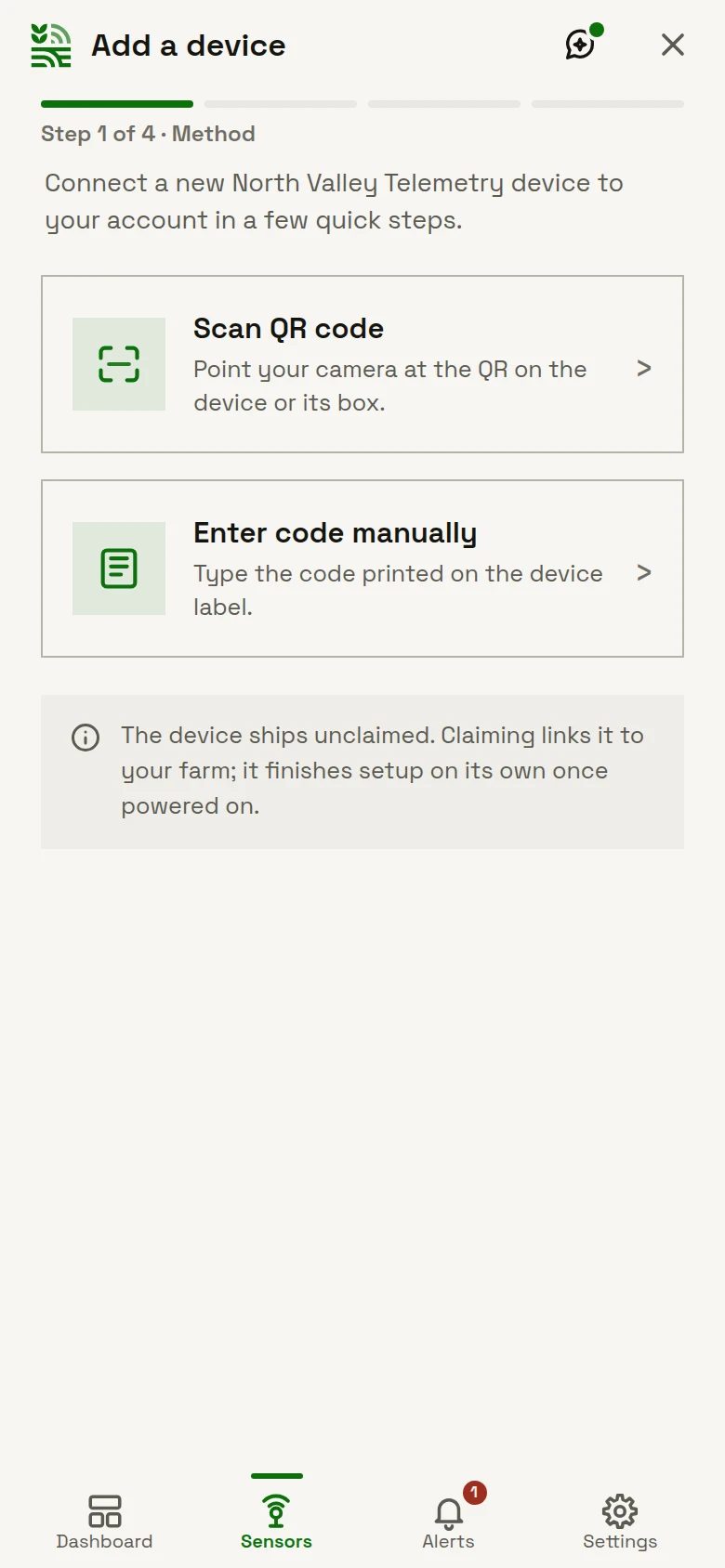
Claiming a node
Scan the code on the device or type it in. The node finishes its own setup the first time it powers on.
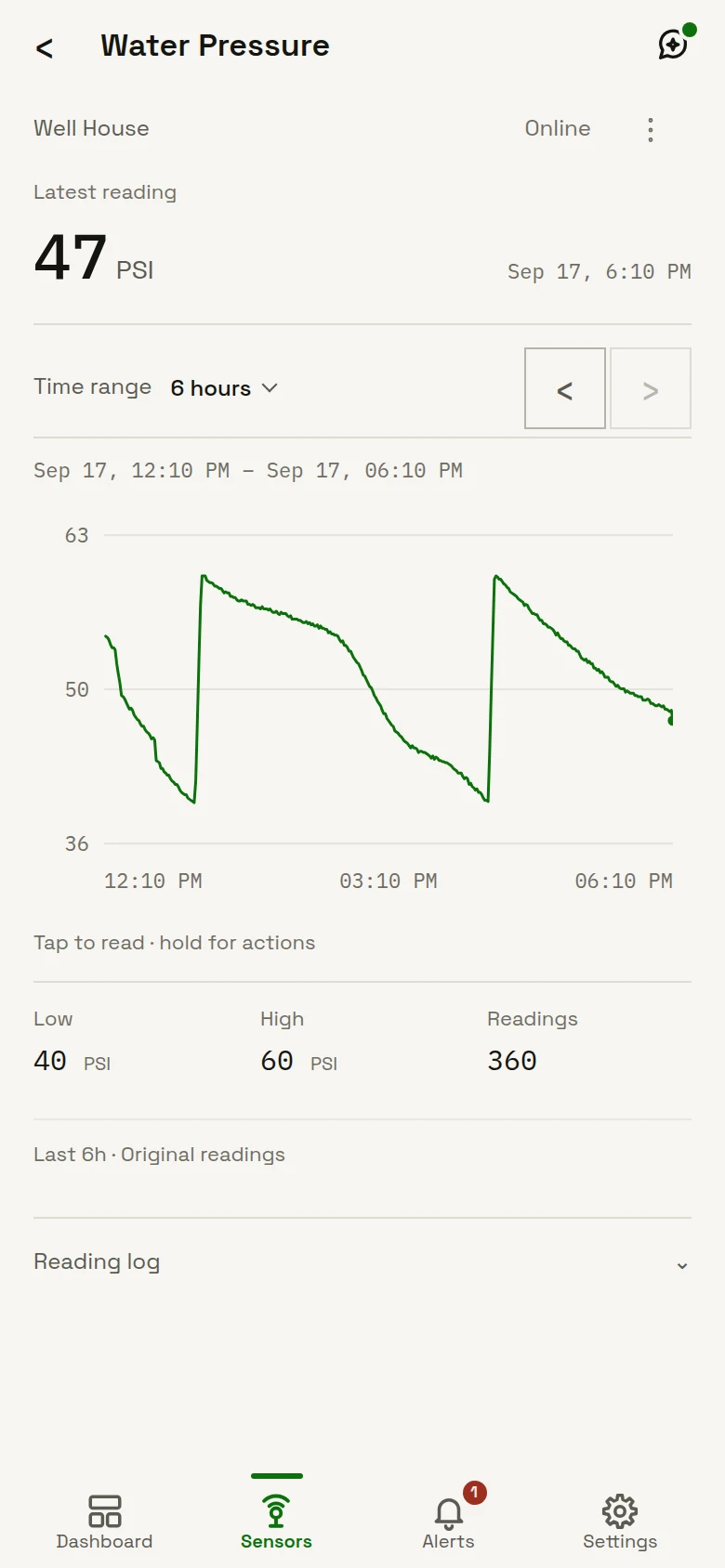
One sensor, in detail
Every channel keeps its own history. Drag across the graph to read a value at a point in time.
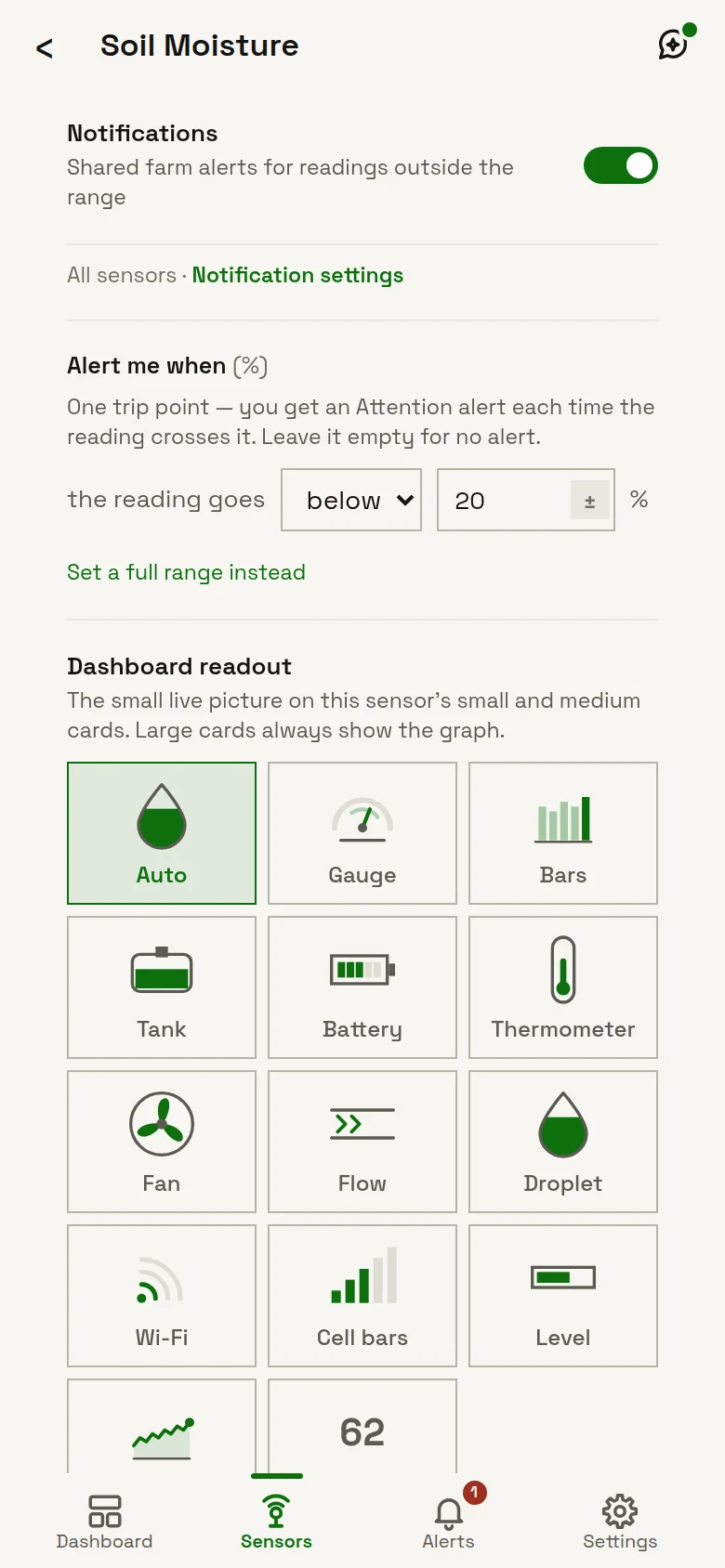
Your own thresholds
Set a trip point per sensor and pick the units it reads in. Alerts go to your phone.
Coverage
What it monitors.
Wells and pumps
Pressure, run status, fault detection
Tanks and canals
Level by pressure or ultrasonic
Pump and relay control
In developmentSwitch equipment remotely
Soil moisture
PlannedProbe-based, per zone
Asset tracking
PlannedLocation and utilization for equipment on the move
Custom sensors
Anything inside the input spec, configured by you
If it produces a signal we can read, it’s a configuration change — not a custom build.
Pricing philosophy
What we’re building toward.
We’re not publishing a price list yet, because we’d rather set it with our first users than guess at it. Here’s what we’re building toward:
- Node hardware that costs less than a day of custom install labor
- A flat monthly subscription per device — no per-sensor licensing, no per-data-point billing
- No long-term contract and no install fee for a setup you can do yourself
If that math matters to your operation, tell us what you’d want to monitor and we’ll talk specifics.
Early access
Request early access.
Tell us what you’d want to monitor first. We’re onboarding a small group, and the ones we can help soonest are the ones we already have a sensor path for.